Research Areas

My research lies at the intersection of optimal transport and machine learning, from theoretical foundations to domain adaptation and applications in genetics and the life sciences, along three axes.

Wasserstein distancesWasserstein barycentersHierarchical OT
Axis 1

Optimal Transport

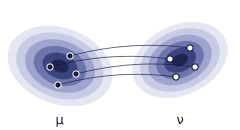
Optimal transport is a mathematical theory for comparing probability distributions by seeking the least costly way of transforming one into another. The resulting Wasserstein distances endow the space of probability measures with a geometry.

This geometry provides a framework for modelling data as distributions, for constructing learning methods that compare, align and interpolate them, and for establishing theoretical guarantees on these methods.
Distribution shiftsOnline domain adaptationIdentifiabilityGeneralization bounds
Axis 2

Domain Adaptation

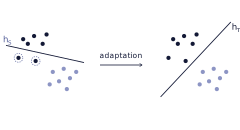
Classical machine learning usually assumes that training and test data are drawn from the same distribution. In practice, this assumption is often violated, as data may vary across environments, or acquisition settings.

Domain adaptation addresses this distribution shift by seeking ways to transfer knowledge from a source domain to a related but different target domain, including online settings in which the target domain evolves over time. In my research, this question is approached through optimal transport, which provides a principled geometric framework for comparing distributions and studying how they may be aligned, while preserving their underlying structure.

Human geneticsmRNA lipid nanoparticlesElectron microscopy
Axis 3

Life Sciences Applications

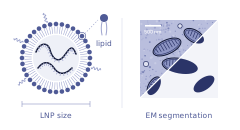
The intersection of machine learning and biological sciences offers tremendous opportunities for advancing our understanding of complex biological processes. My current research applies optimal transport and machine learning to genetics and nanomedicine. I also work on deep learning for electron microscopy, with a focus on image segmentation and 3D reconstruction.